Quality · QC laboratory (LIMS)
From sample to certificate, judged by the specification
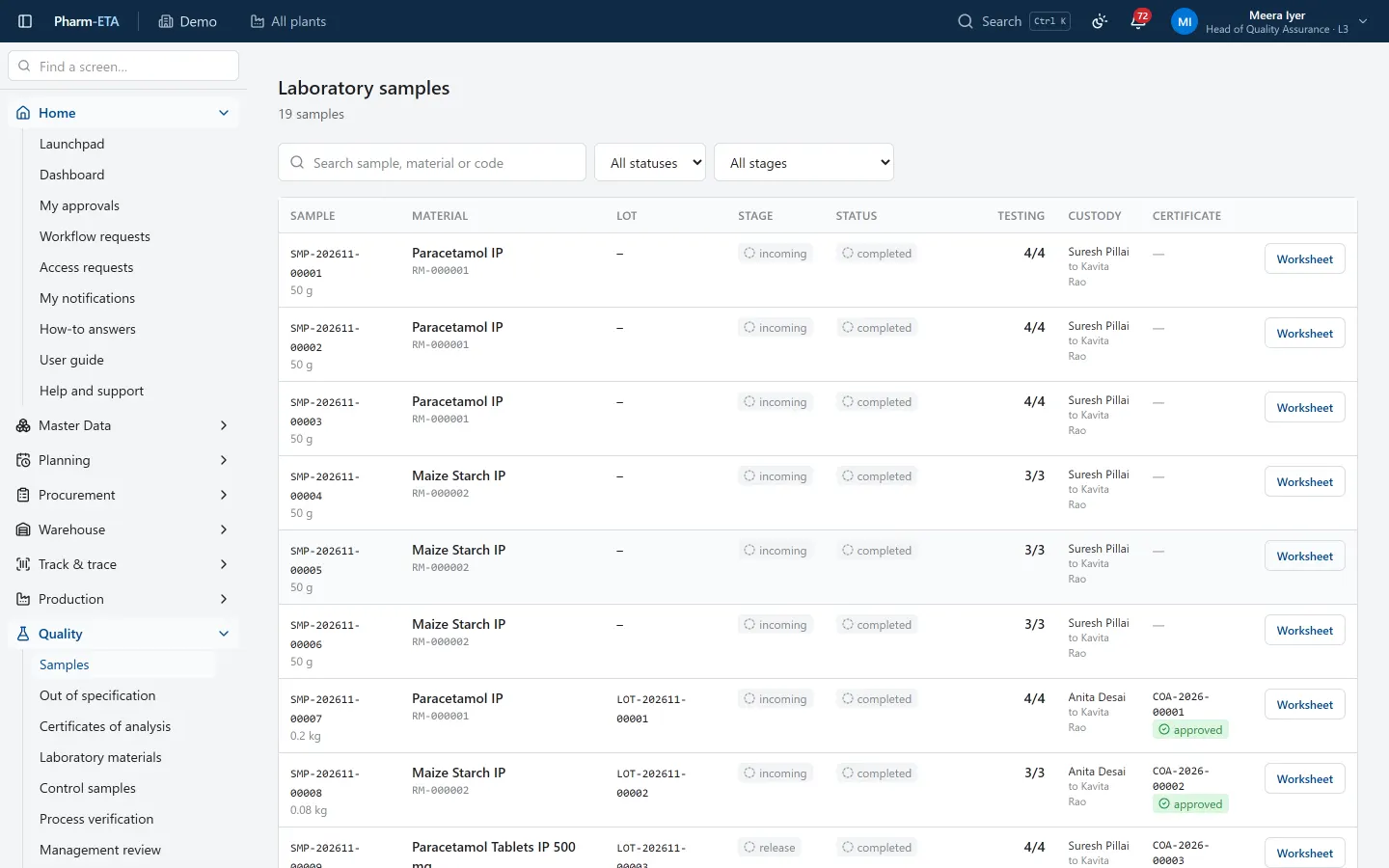
Samples are drawn, received and tested against the released specification. The system compares each result with its limits and decides the verdict. An out-of-specification result opens its own investigation, and no certificate is issued while one is open.
What it covers
QC laboratory (LIMS) in Pharma-ETA
Sampling and sample management
Sampling plans and sampling advice, sample registration, receipt into the laboratory, retention and control samples.
Specifications and methods
Specifications authored, reviewed and released by version. Analytical methods linked to the tests that use them.
Results and verdicts
Tests are generated from the specification. Each result is judged pass or fail by the system, not by the analyst. A correction supersedes the original, which stays readable.
OOS and OOT
An out-of-specification result opens an investigation automatically. Out-of-trend results and trending are tracked, including in stability.
Certificates of analysis
CoAs prepared from the approved results and approved by a second person.
Instruments and calibration
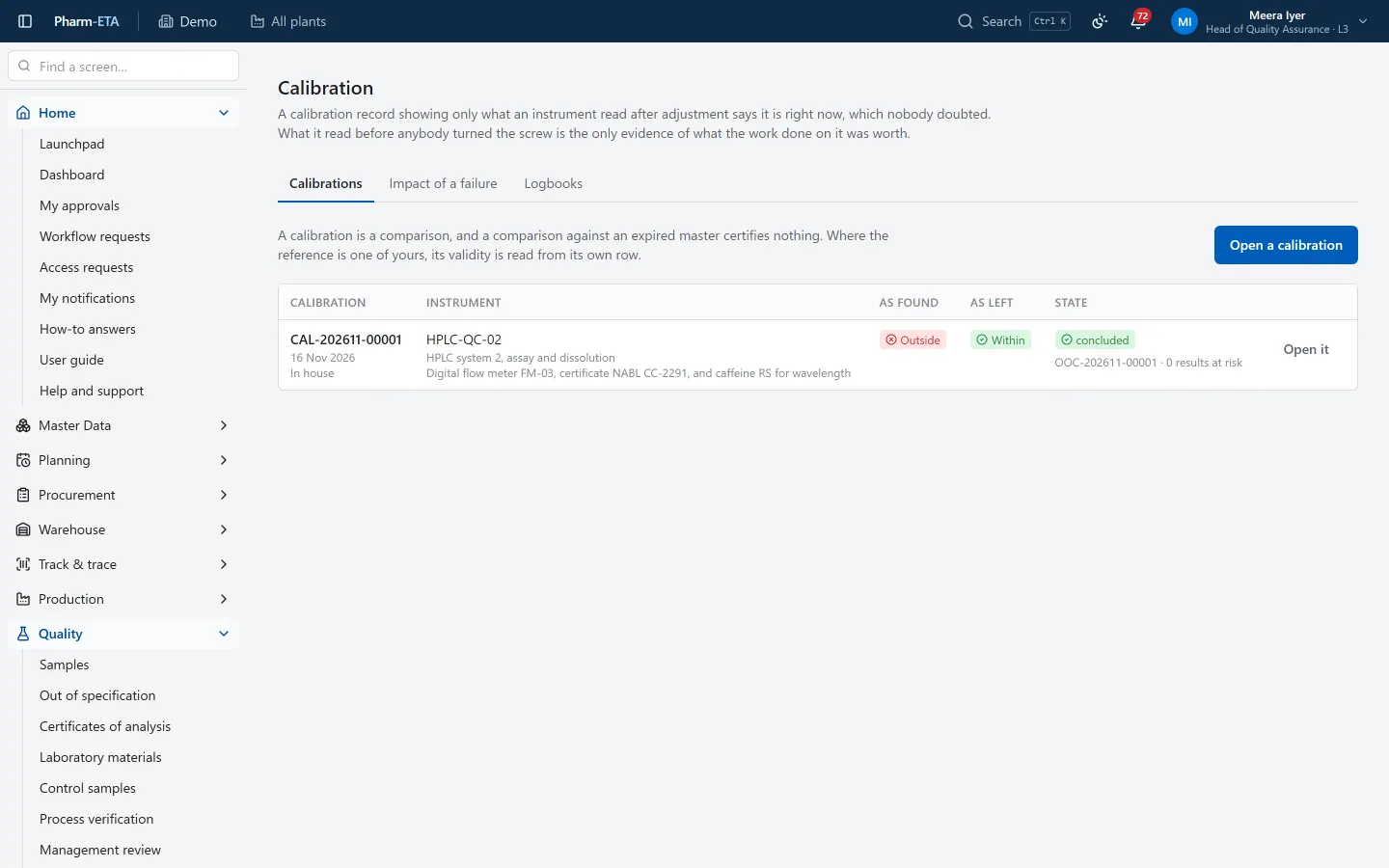
An instrument register with calibration status. A result from an instrument out of calibration is refused.
Instrument integration
Readings collected from chromatography data system exports, weighing balances and chambers, with the raw data kept whole and hashed. A typed value needs a reason and appears on a report.
Stability studies
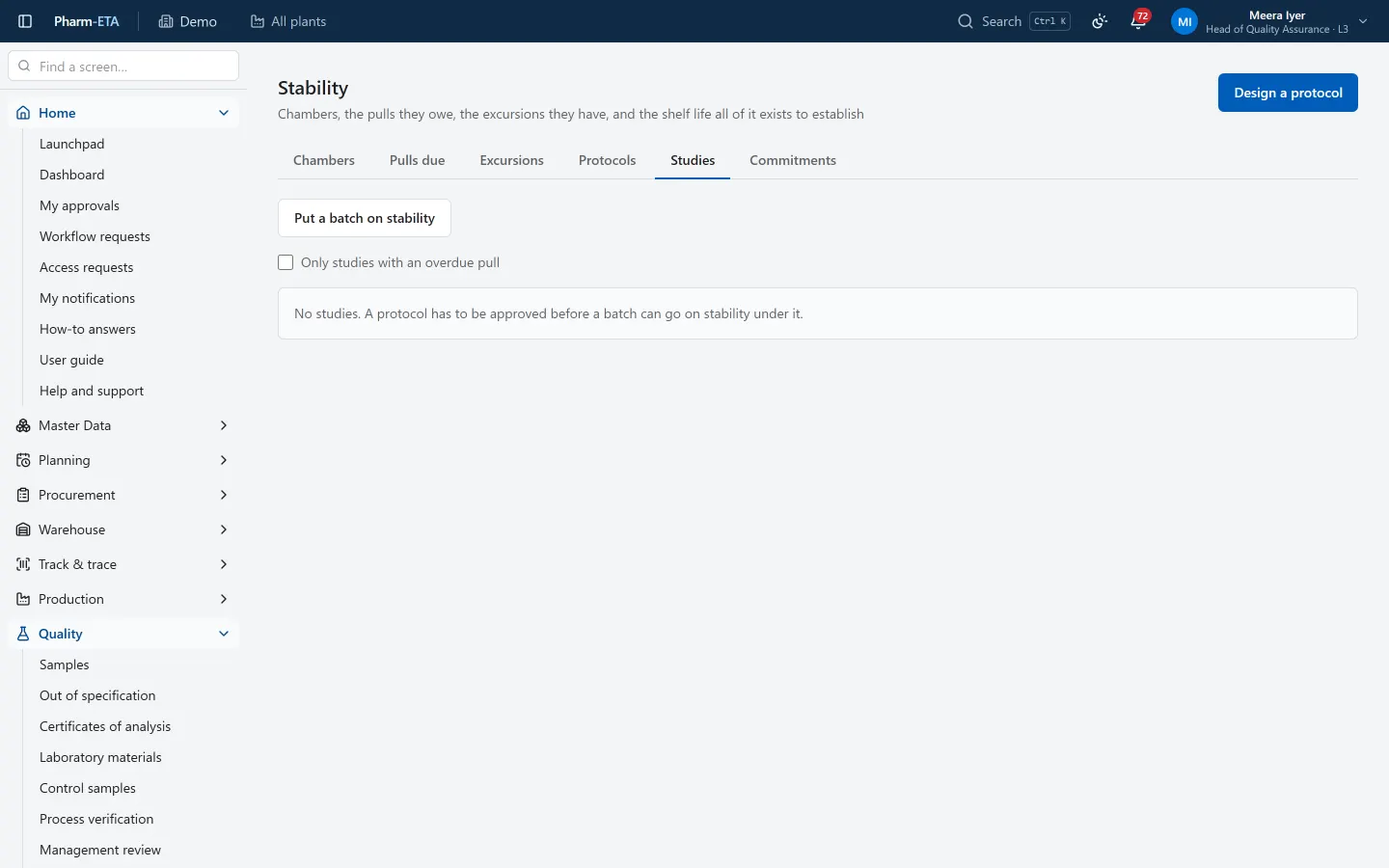
Protocols, chambers, pull schedules, excursions with mean kinetic temperature, and shelf life that states how much of it is extrapolation.
Laboratory housekeeping
Reagents and volumetric solutions, glassware, laboratory stock, outside testing, laboratory records and format issuance.
Rules it enforces
What the system will not let anyone do
Each of these is refused at the moment it is attempted, with the reason shown in plain words to the person who tried.
- An analyst who is not trained for the act drawing or testing a sample.
- Invalidating an out-of-specification result without a verified root cause.
- Issuing a certificate of analysis while an investigation is open.
- The analyst who prepared a certificate approving it.
- Recording a result from an instrument that is out of calibration.
- Putting samples on stability under a draft protocol.
- Taking a stability pull from a chamber with an unassessed excursion.
- A 24-month shelf life with no long-term data behind it.
More screens
Built in, as everywhere
The controls every module shares
Common questions
Does it connect to HPLC and balances?
Yes. Readings can be collected from chromatography data system file exports, from balances over a serial connection and from chambers or PLCs over Modbus TCP. The raw data is kept and hashed, and the result carries that hash.
Can an OOS result be invalidated?
Only with a verified root cause recorded on a structured investigation. A note saying “analyst error” is not enough, because an invalidated OOS is the figure an inspector reads most sceptically.
Works with
Microbiology and sterile assurance
Environmental monitoring, water, media, sterilisation, media fills, disinfectants and cleaning validation.
Quality management (QMS)
Deviations, CAPA, change control, complaints, recalls, audits, risk and the annual product review.
Procurement and vendor qualification
Requisitions to purchase orders, and vendor qualification from provisional ID to the Approved Vendor List.
Early access is open
See it on your own process
A 30-minute walkthrough with the people building Pharma-ETA, on the workflows you run today. No slides.